
Keep-It-Simple Financial Planning (Part 2)
Last week in Keep-It-Simple Financial Planning (Part 1) I shared the economic theory of utility, which says that people have an unlimited number of desires and only limited means to fulfill them. We explored whether debt is bad, reviewed key financial terms, and walked through a net worth analysis. This week we continue where we left off and build a plan to eliminate debt.
The first rule of financial planning is do not go into more debt. Plan to spend only what you bring in each month — preferably less. If you use credit cards, pay new balances in full every month. Credit cards easily become crutches, and many people discover they lack available credit when a real emergency appears. If you struggle to stop using them, make them inconvenient: wrap them in paper and freeze them, or lock them in a filing cabinet. Friction forces conscious spending.
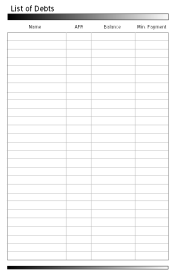
When planning for financial freedom, print a copy of the List of Debts form to record all liabilities. Include the debt name, annual percentage rate (APR), balance, and minimum payment. Some debts have fixed timelines (like car loans or mortgages); others, like credit cards, do not. Seeing the full picture allows you to make intentional payment decisions.
Before paying creditors, determine how much above the minimum you can afford. Paying extra accelerates progress. Then organize debts from the smallest balance to the largest. Early wins reinforce motivation and demonstrate that the plan works.
Follow these steps for each debt:
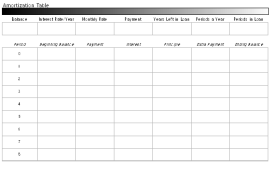
- Print an amortization table.
- Enter the beginning balance.
- Enter the yearly interest rate.
- Divide the yearly rate by 12 and enter the monthly rate.
- Enter the minimum payment.
- Enter 12 for periods per year (monthly debts).
- Enter the remaining number of periods in the loan.
- Record the ending balance for period zero.
- Carry each ending balance forward as the next beginning balance.
- Enter the payment amount.
- Multiply the beginning balance by the periodic rate to calculate interest.
- Subtract interest from the payment to determine principal.
- Add any extra payment.
- Subtract principal and extra payment from the balance.
- Repeat until the balance reaches zero.
An example spreadsheet is included with the downloads to demonstrate these calculations.
As each loan is paid off, roll its payment amount into the next debt. This accelerates payoff momentum. Once each loan is amortized, transfer totals into a debt elimination schedule.
If extra funds remain at the end of a loan period, apply them to the next debt.
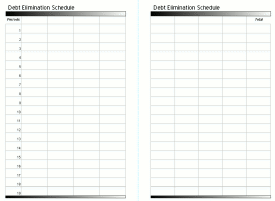
Print the Debt Elimination Schedule and list debts across the top. Enter payments period by period. Each column should total the same amount until the final payment. At that point, you have a complete debt-freedom roadmap.
The Enlightenment advanced the idea that people should not live in bondage. Debt can become a modern form of bondage — straining relationships, draining peace of mind, and threatening stability. Eliminating debt restores flexibility, security, and freedom. Debt is a tool. Use it carefully and make it serve you, not the other way around.
Downloads
Originally posted on D*I*YPlanner.
Subscribe via RSS